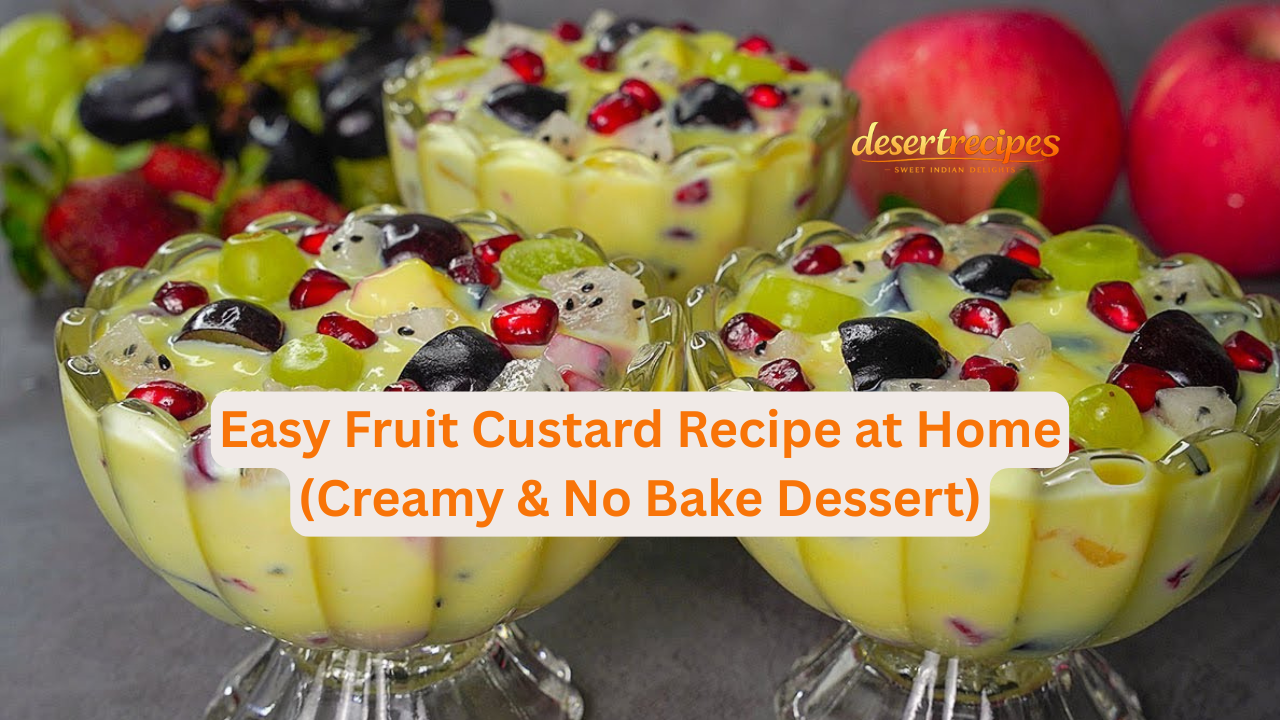
Easy Fruit Custard Recipe at Home (Creamy & No Bake Dessert)
About This Recipe
Fruit custard is something that feels like a soothing dessert to me. Because it is one of those desserts that instantly feels comforting and familiar. Though it is simple, colorful, and made with everyday ingredients found at home, many of us still find it enjoyable.
This recipe is perfect for the days when you don’t feel like baking or spending too much time in the kitchen. I usually made it for family lunches, small gatherings, or just a treat.
This fruit custard recipe is ideal for anybody who wants to make it. Whether you’re making it for kids, guests, or yourself, this simple fruit custard always turns out delicious and satisfying.
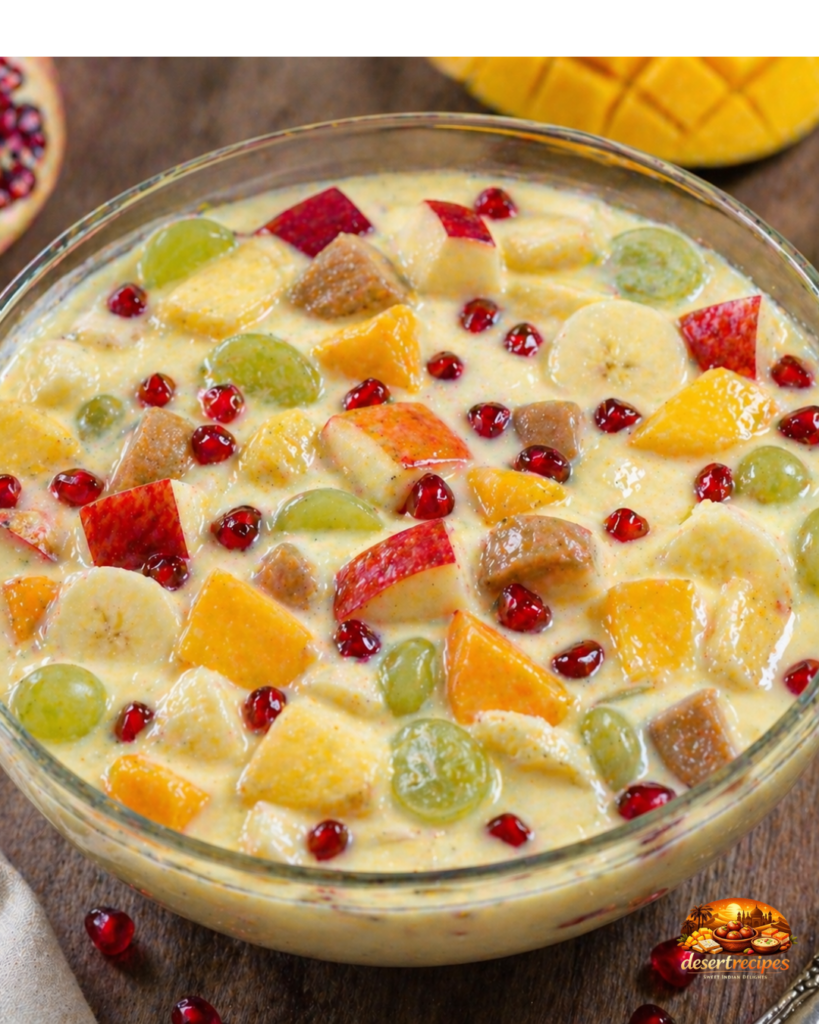
Why You Will Love This Fruit Custard
You will love this fruit custard because it is incredibly easy to make and does not require any baking or usage of special equipment. It’s a family-friendly dessert that every age group enjoys, making it perfect for everyday meals as well as small gatherings. I would call this recipe a flexible one because you can choose any kinds of your favorite fruits or whatever you have at home, and it does not affect the final taste at all.
What Is Fruit Custard?
In simple words, I would say a fruit custard is a creamy dessert made using milk, custard powder, sugar, and lots of fresh fruits. I like to think of it as one of the easiest desserts you can make at home, because it uses basic ingredients and very little effort.
You might also want to know that Indian fruit custard is very different from baked custard. Indian Fruit Custard is an eggless dessert that is thickened using custard powder and then mixed with different kinds of fruits. Whereas, baked custard refers to an egg-based pudding which is cooked using an oven, and has a firm texture. The key differences are the thickeners used in making. In fruit custard, custard powder or starch is used, while in baked custard, eggs are used.
Ingredients List
- Full-cream milk – 2 cups
- Vanilla custard powder – 2 tbsp
- Sugar – 3–4 tbsp
- Fruits (apple, banana, grapes, mango, pomegranate, chikoo, etc.)
- Chopped nuts (optional)
A Quick Note on Ingredients
Full-Cream Milk – 2 Cups
I personally like to use full-cream milk because it gives the custard a rich and creamy based, smooth texture. I prefer using full-fat milk because it thickens in the correct consistency and makes the custard taste more satisfying. You can also use low-fat milk, but the custard may slightly feel thin.
Vanilla Custard Powder – 2 Tbsp
Custard powder stands out as the main ingredient in the preparation of fruit custard. This is what thickens the milk and gives custard its classic flavor. Though vanilla is the most commonly used custard powder, you can use any custard powder you like. Make sure to always dissolve the custard powder in cold milk first, as it avoids lumps and gives a smooth texture to the milk.
Fruits to avoid
From my experience, not all fruits go well with the fruit custard. This happens because some of the fruits have a bad reaction to milk and can change the taste and texture of the custard.
Citrus fruits like oranges, sweet limes (mosambi), lemons, and pineapples should be avoided because they can make the custard turn sour in taste.
Watermelon and muskmelon also should be avoided because they release a lot of water when they are mixed with custard. This results in a watery texture of the fruit salad.
Always choose sweet and firm fruits and add them only after the custard has completely cooled. These simple steps keep the custard fresh, creamy, and enjoyable.
Recipe Overview
Preparation time—10 minutes
Cooking time—10 minutes
Chilling time—1-2 hours
Total time – 1 hour 30 minutes
Servings – 4 servings
Step-by-step process
Step 1: Heat the milk
Take a heavy-bottomed pan and add 1 1⁄2 cups of milk. Then start boiling the milk on medium flame.
Tip: Keep stirring the milk gently at regular time intervals so that it does not stick or burn at the bottom of the pan.
Step 2: Preparing the Custard Mixture
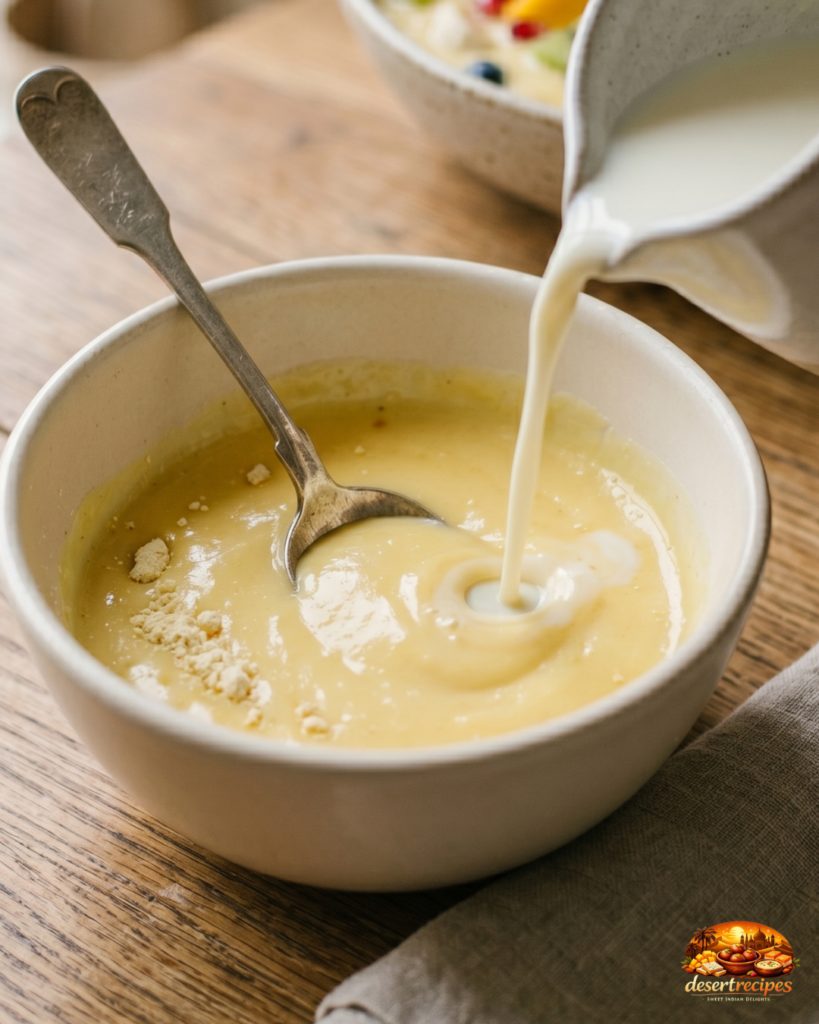
Now take a small bowl and add custard powder to it. Then add the remaining cup of milk to it and give it a nice mix until the mixture is smooth and becomes lump-free.
Tip: Always dissolve the custard powder in cold milk for the best texture.
Step 3: Adding sugar to the milk
Now add sugar to the boiling milk and keep stirring until it dissolves completely.
Tip : Keep the sweetness mild at this stage because when we add fruits later it will naturally increase the sweetness of the custard.
Step 4: Add custard mixture
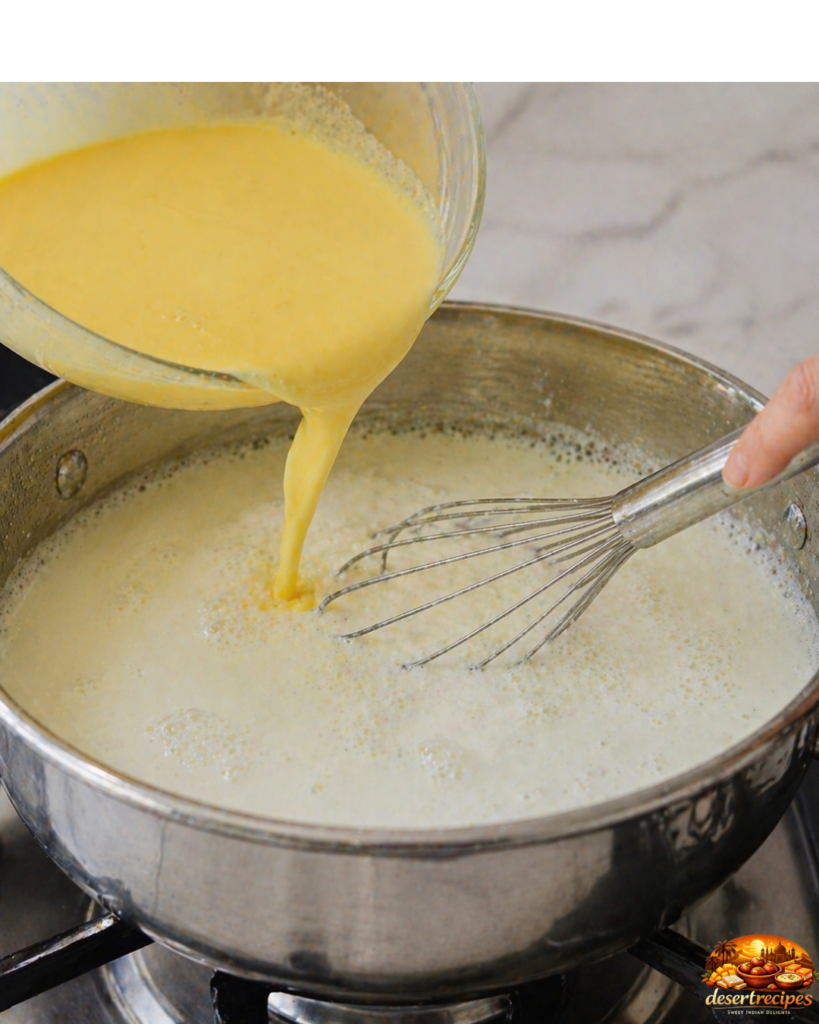
Now keep the heat on low flame and slowly pour the custard mixture into the milk and stir continuously so that it blends completely into the milk.
Tip: Keep stirring continuously to avoid any formation of any lumps.
Step 5: Letting the Custard thicken
Keep cooking the custard on low heat until the texture of it thickens.
Tip: Do not overcook the custard at this stage because it will turn thick after cooling down.
Step 6: Chill the Custard
Now you can remove the pan from the flame and let the custard cool completely at room temperature. After it has been cooled, place the custard in the refrigerator and let it chill for 1-2 hours.
Tip: Chilled custard has the best taste.
Step 7: Mixing the chopped fruits
Now you can add all the chopped fruits we have previously cut to the chilled custard and mix everything gently.
Tip: Add the fruits only after the custard has completely chilled because this helps to prevent sourness and keeps the custard fresh.
Beginner Tips
- To avoid lumps in custard, always dissolve the custard powder in cold milk and stir continuously while adding it to hot milk.
- The custard should be thick enough to coat the back of a spoon, but it should still be able to flow easily because it will thicken more as it cools.
- Remember to always add fruits only after the custard has been cooled down completely because adding them to warm custard can make the custard turn sour or watery.
Fruit Selection Guide for Fruit Custard
The best fruits suitable for fruit custard are apple, banana, grapes, mango, pomegranate, chikoo, pear, and strawberries. These fruits add color, texture, and natural sweetness without reacting badly with the milk.
Some fruits should always be added only after the custard has completely chilled. Fruits like bananas, apples, mangoes, and grapes release moisture when they are warm, so mixing them into cold custard helps prevent wateriness and keeps the dessert fresh for longer.
Now if we talk about seasonal options, you can easily make fruit custard throughout the year. In summer, mangoes, strawberries, grapes, and pomegranates work beautifully. During winter, apples, pears, and bananas are great choices.
How to Serve Fruit Custard
I usually serve it straight from the fridge in small bowls or glass cups, because it looks more inviting and stays cold for a longer time.
For a simple finish, you can top it with chopped nuts or a few fruit pieces just before serving.
Frequently Asked Questions (FAQs) – Fruit Custard
- Can fruit custard be made without custard powder?
Yes, fruit custard can be made without custard powder. The best alternative for custard powder is cornflour but the flavor might slightly vary.
- Why does fruit custard turn lumpy?
Lumps are usually formed when custard powder is added directly to hot milk or if it is not stirred continuously. To avoid it make sure to always dissolve it in cold milk before adding.
- Which fruits are best for custard ?
Mixed fruits like apples, pomegranate, bananas, grapes, mangoes, strawberries, and cherries are the best options to add in the fruit custard.
- How many days can we store fruit custard ?
Fruit custard can be stored in the refrigerator for up to 2 days. But make sure to cover it tightly in the container to prevent any absorbing of the fridge odors.
- How can I thicken fruit custard ?
Watery fruit custard can be made by cooking it for a longer time, and adding thickeners such as cornstarch.