Ajmeri Kalakand Recipe at Home (Soft & Juicy Indian Sweet)
About Ajmeri Kalakand
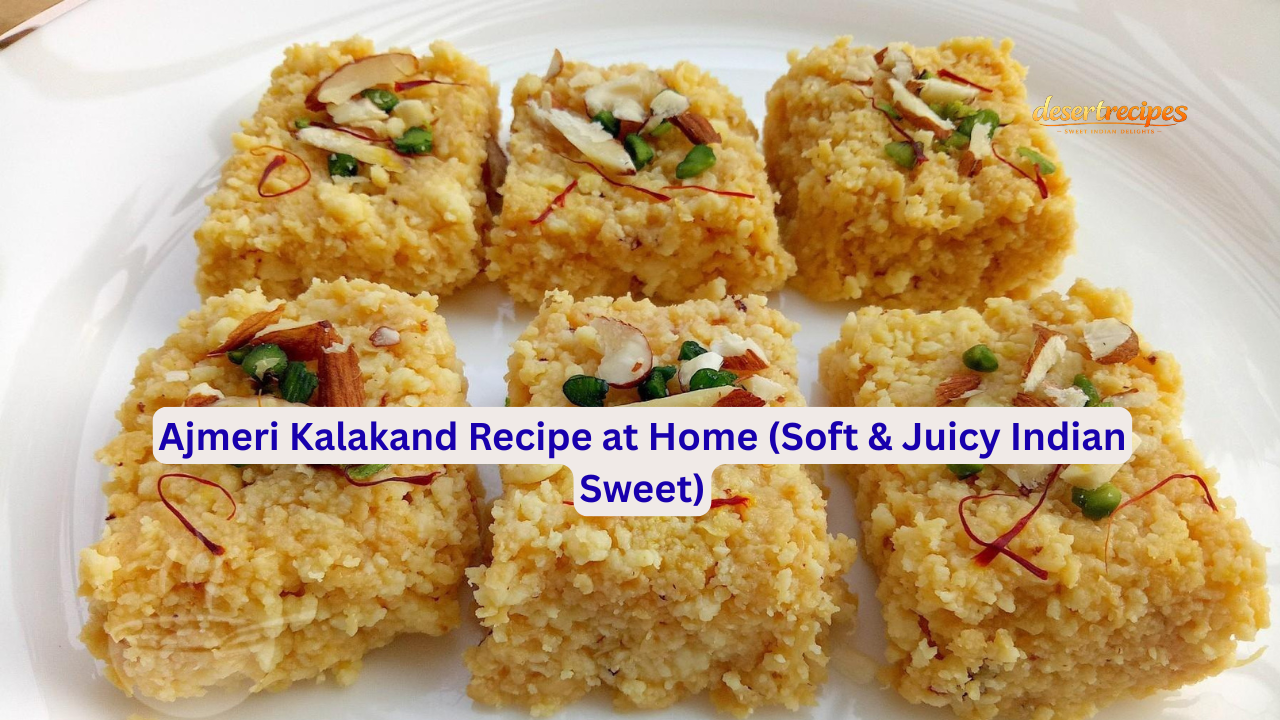
Ajmeri Kalakand is a soft, juicy, milk-based Indian sweet/mithai with rich flavour, and grainy texture. Any festival seems incomplete without this special ajmeri kalakand sweet. I usually make this Ajmeri Kalakand Sweet during festivals and family celebrations.
This ajmeri kalakand sweet is ideal for beginners, festival preparations and anyone who wants to make quick mithai (sweet) with milk. If you are new to making Indian sweets, then this ajmeri kalakand is great to start with.
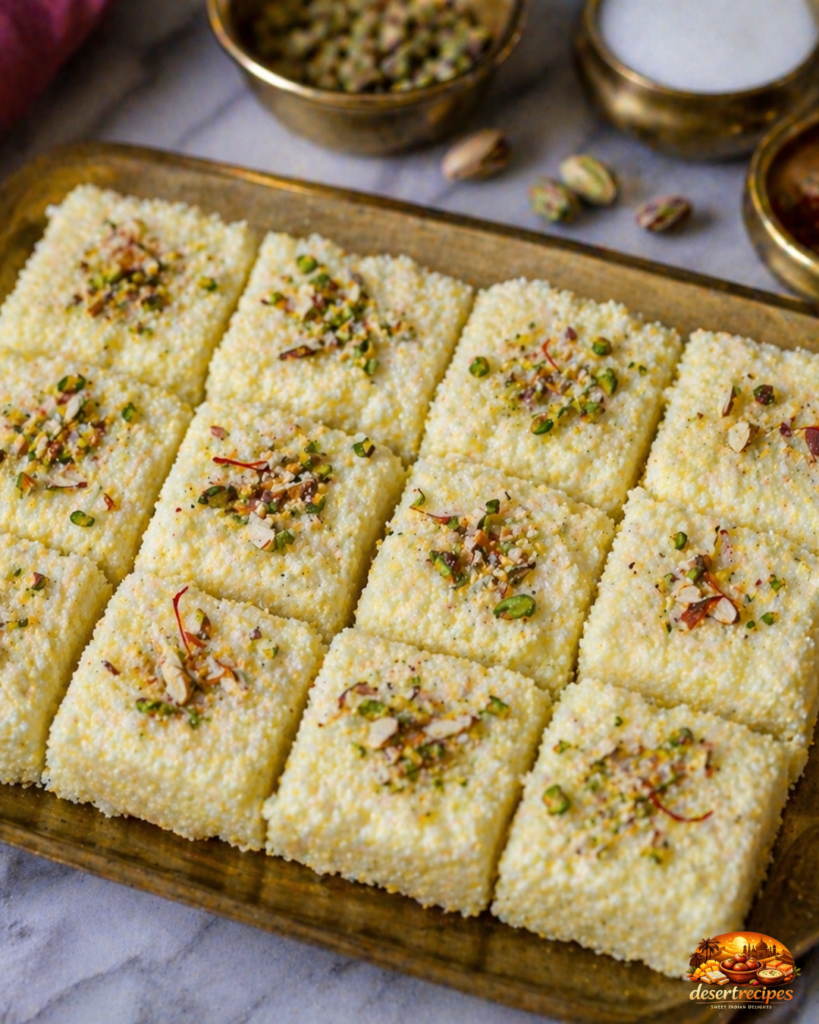
Difference Between Kalakand and Ajmeri Kalakand
Kalakand and Ajmeri kalakand are almost similar to each other. The only difference between them is texture, method, and the overall taste. We use ‘Kalakand’ as a broad term for milk-based sweets, while the ‘Ajmeri Kalakand’ is a specific and popular variety of kalakand.
Well, for you to understand in simple terms all Ajmeri Kalakand is kalakand, but not all kalakand is Ajmeri Kalakand.
How kalakand in different from Burfi or Milk Cake
Kalakand is often confused with burfi or milk cake as all are milk-based sweets, but the preparation and taste are quite different.
Barfi (or Barfi) is known for its dense and firm texture. It is made using milk solids like condensed milk, milk powder, milk fudge (khoya) and garnished with dry fruits, nuts and saffron.
Whereas Milk Cake on the other hand has a denser and slightly caramelised texture. It is made by cooking the milk slowly for a long time until it becomes thick and slightly brown in colour. It is heavier and richer than kalakand and it has a layered texture when you cut it.
Kalakand sits somewhere in between these two. It is softer and more moist than burfi and much lighter than milk cake.
Ingredients list
Let me keep the ingredients simple and clear.
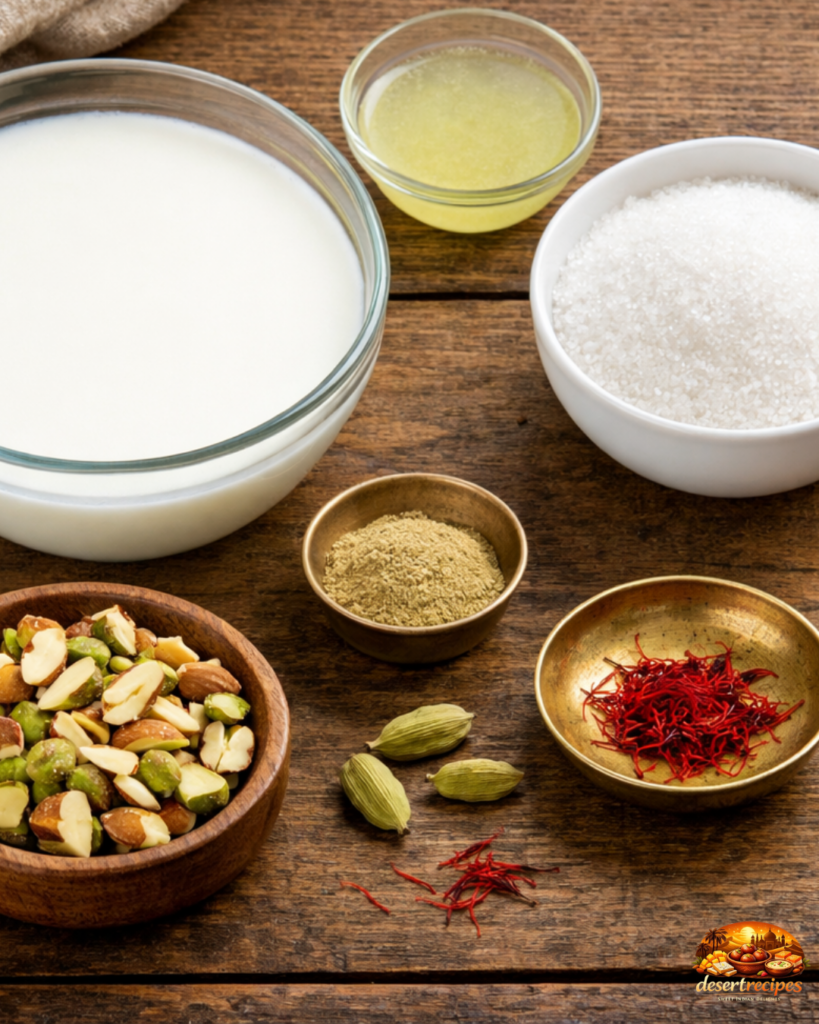
1 litre full-cream milk
2 tbsp lemon juice or vinegar
½ cup sugar (adjust to taste)
¼ tsp cardamom powder
2 tbsp chopped nuts
A few saffron strands (optional)
Recipe overview
Preparation time – 10 minutes
Cooking time – 30-35 minutes
Setting time – 2 hours
Total time – 2 hours 45 minutes
Servings – 12 to 15 pieces
My homemade version
- To get started, pour 1 litre milk in a heavy-bottomed pan and bring it to a boil on medium flame. Keep stirring the milk occasionally.
- To the boiling milk, add 2 tbsp of lemon juice or vinegar (little by little) and keep stirring the milk gently.
- Wait until the milk gets curdled. If the milk doesn’t get curdled, add more lemon juice. You will notice the milk will split into white curds and greenish whey.
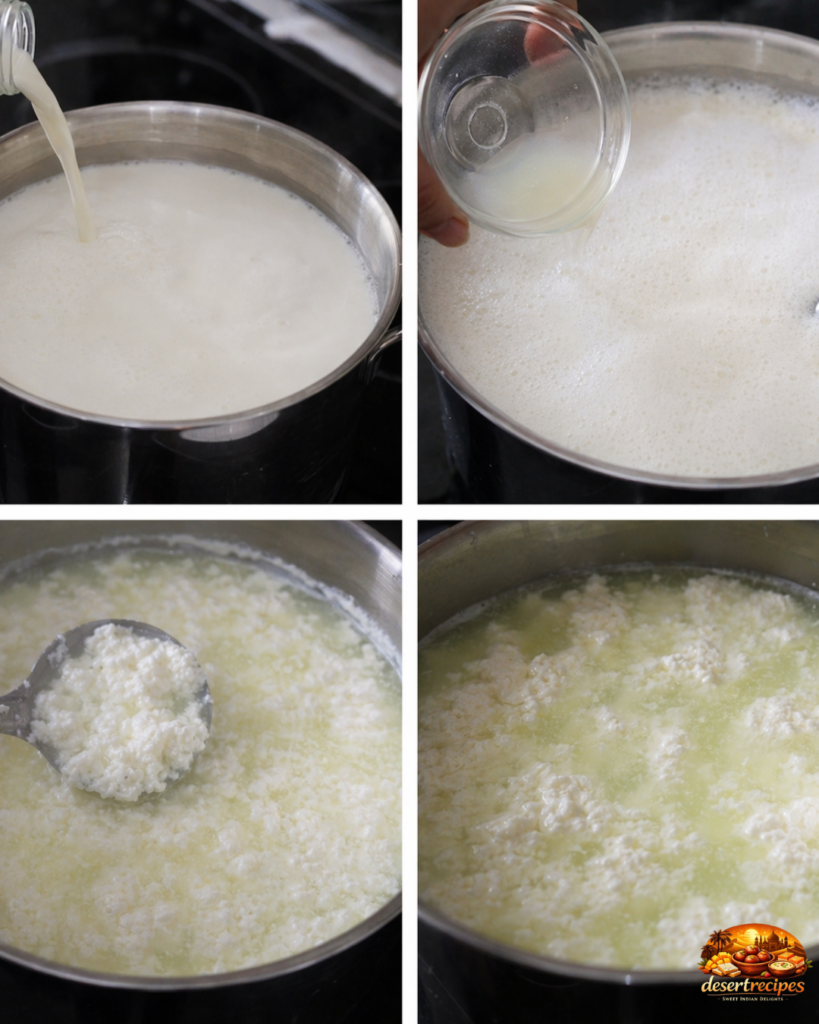
- Do not immediately strain the milk, keep the milk curds and the whey together for sometime because it will result in a soft texture of the kalakand.
- Keep cooking the curdled milk on low to medium heat while stirring continuously. Do it until most of the liquid reduces. Then strain it using a colander or simply a muslin cloth.
- Now add ½ cup sugar and mix it well. You will notice the mixture becomes loose.
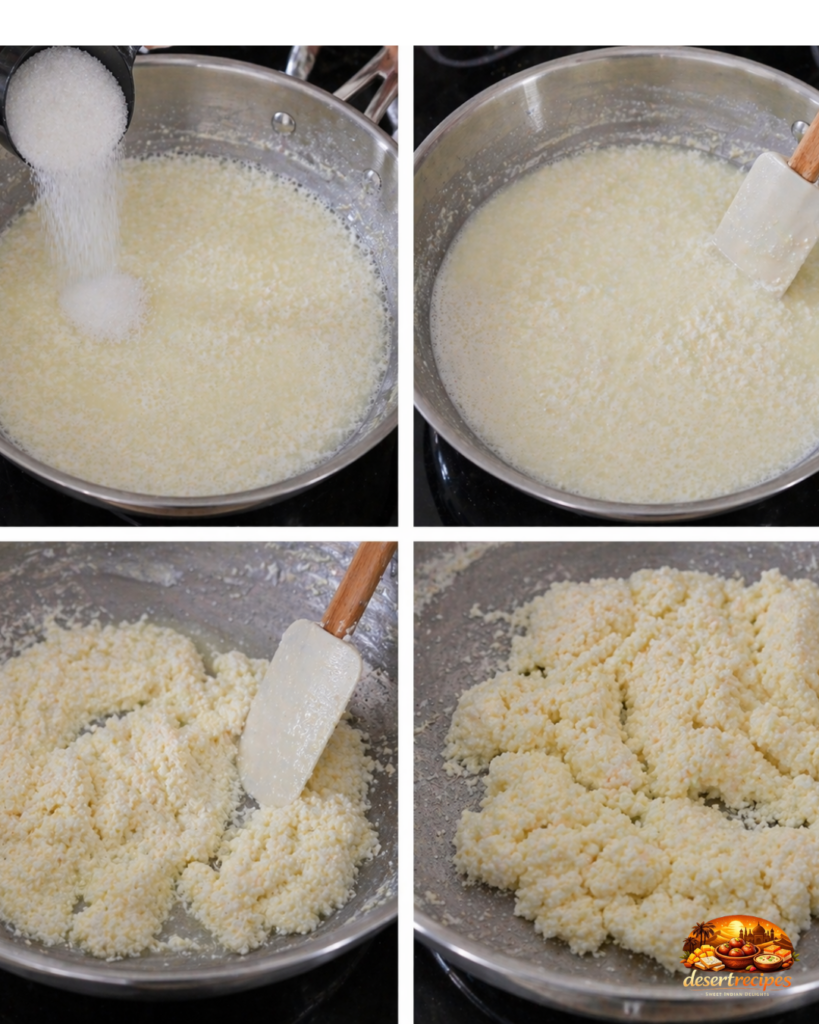
- Continue cooking after adding sugar until the mixture thickens and starts to leave the sides of the pan. At this stage, the mixture should look moist, soft, and slightly grainy. This will take about 8-10 minutes.
- To bring flavour to the kalakand we add ¼ teaspoon cardamom powder and mix gently.
- After the mixture thickens to the correct texture, we take a tray which has to be greased lightly with ghee and transfer the hot mixture into it. You can spread it lightly using a spatula.
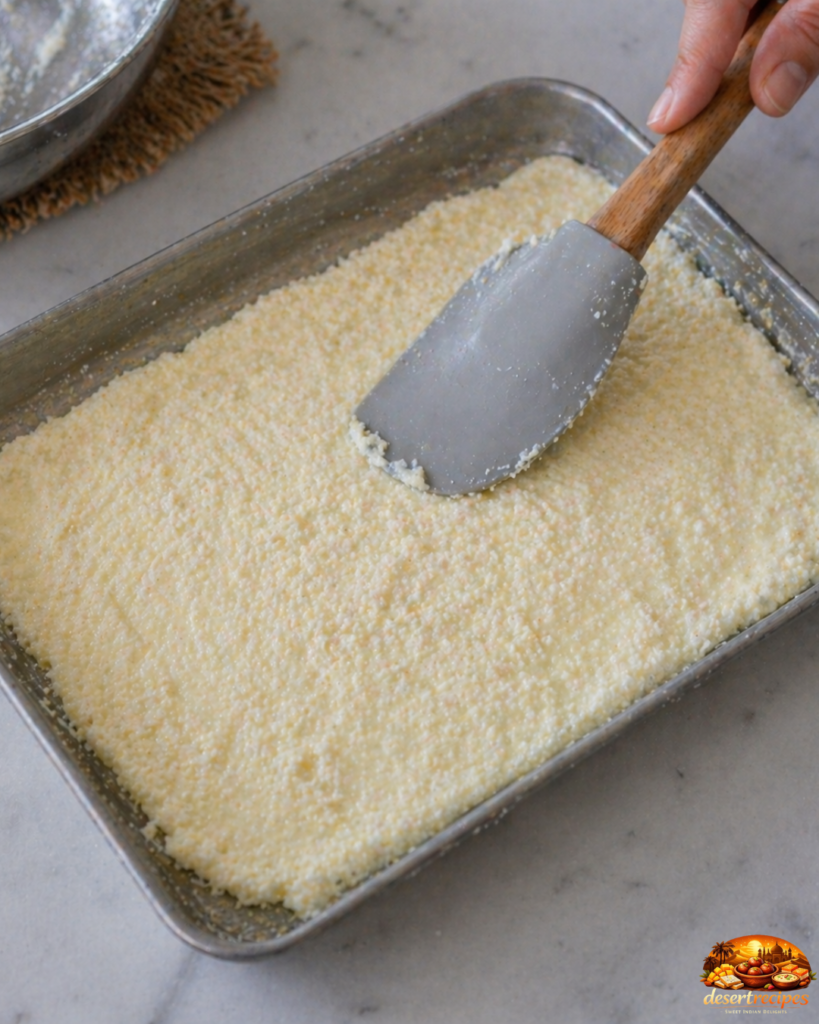
- For the final garnishing, sprinkle chopped nuts and a few saffron strands on it. Now allow the kalakand to rest for about 2 hours in the refrigerator.
- You can now slice it into squares or diamond pieces.
Beginner Reassurance
If the mixture looks slightly wet while it is hot, do not worry because Ajmeri Kalakand firms up naturally as it cools and sets.
Common Mistakes to Avoid
- One common mistake to avoid is draining the whey after curdling the milk. Whey is important for ajmeri kalakand as it will keep the kalakand soft and moist.
- Another mistake to avoid is cooking on high flame. This can make the kalakand hard which we do not want. Always cook the kalakand on a medium to high flame.
- Avoid adding too much lemon or vinegar as it could result in a sour taste of kalakand.
- Finally, avoid cutting the kalakand too early. Give it time to rest and settle properly.
Storage of Ajmeri kalakand
Ajmeri kalakand, when stored properly in the fridge , stays fresh for up to 3-4 days. Since it is made using milk, it is best consumed early for best taste and texture.
Kalakand does not need reheating. If it feels too firm, then let it sit for 10-15 minutes at room temperature before serving and you are good to go.
Frequently Asked questions
- What are the ingredients of Ajmeri kalakand?
Ajmeri kalakand is made using full-cream milk, sugar, cardamom powder, vinegar, and a handful of chopped nuts.
- Why is it called Ajmeri Kalakand?
It is called Ajmeri kalakand because it originated and is famously associated with Ajmer, Rajasthan, India.
- How do I know when the kalakand is ready?
When the mixture starts to look thick, moist, slightly grainy and it starts leaving the sides of the pan, that is when you know the kalakand is ready.
- Why did my kalakand turn dry or hard?
This usually happens when the kalakand is overcooked or cooked on high flame. Ajmeri kalakand should always be cooked on low to medium flame.
- Should Ajmeri Kalakand be served cold or at room temperature?
Ajmeri kalakand tastes best when it is slightly soft. Take it out of the fridge and let it sit at room temperature for 10-15 minutes.