Semiya Payasam With Milk Recipe
Have you ever tasted a simple homemade dessert which instantly reminds you of comforting childhood memories, festivals, and family gatherings? So, Semiya payasam is one of those traditional Indian sweets that feels warm and special with every spoonful.
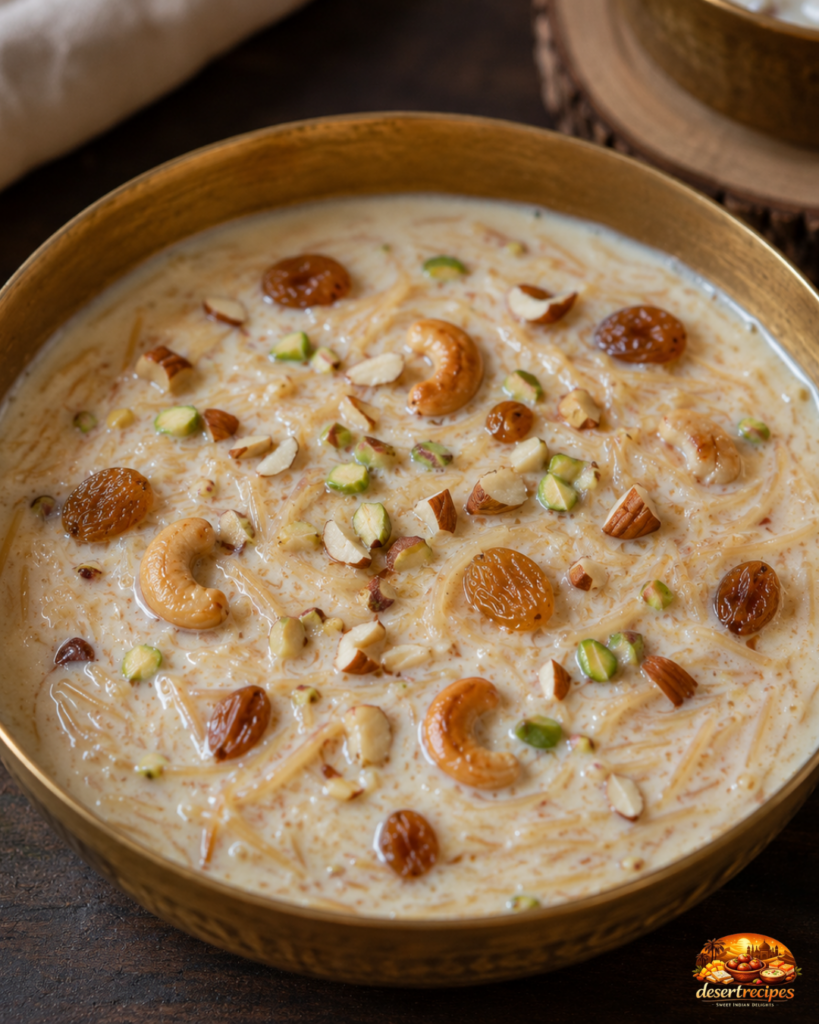
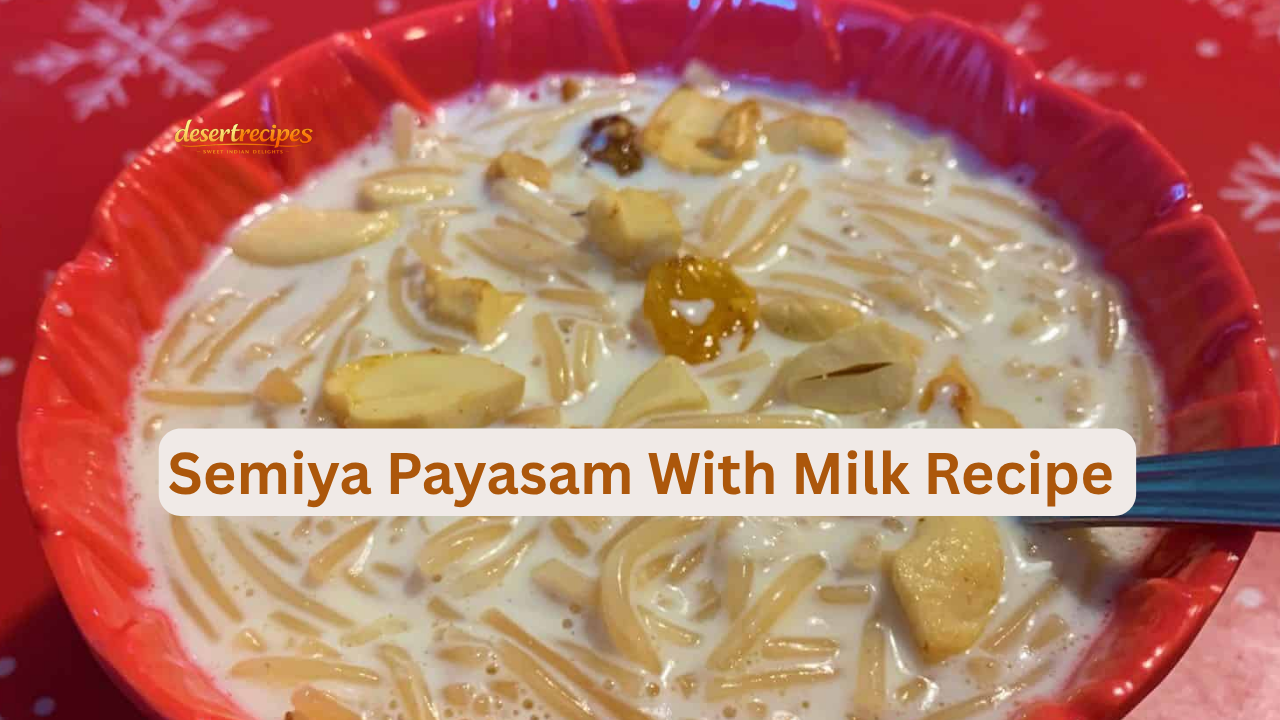
Semiya Payasam is a delicious Indian sweet which is prepared using roasted vermicelli, milk, sugar, and dry fruits. This sweet dish is loved in many Indian households because of its rich flavour and simple preparation method. Even though it uses basic kitchen ingredients, the taste feels festive. We prepare semiya payasam during festivals, poojas, birthdays, family gatherings, and on special occasions. The aroma created by the combination of roasted semiya, milk, cardamom, and ghee makes the kitchen feel nostalgic. Even now this dessert reminds me of those happy family moments and festive evenings together.
This delicious semiya payasam can be served during cozy evenings or chilled during summer which makes it a perfect homemade dessert for every season.
What Makes Semiya Payasam So Special?
Semiya Payasam is not just a simple dessert for many Indian families. It is also a sweet dish which carries memories, traditions, and emotions connected to various festivals, poojas, and family gatherings. Even though it is prepared using simple ingredients, the taste feels rich and special every single time.
One of the biggest reasons why semiya payasam feels so special is the emotional connection people have with it. Many of us grew up eating this sweet during birthdays, temple visits, festive lunches, or family celebrations. I personally remember waiting excitedly in the kitchen while the semiya is cooked slowly in the milk making the entire house feel festive. It is also considered as a comfort dessert because it feels soothing when eaten after meals.
Another reason this dessert is so special is because it is commonly prepared during poojas. In many Indian homes, semiya payasam is served as a prasadam or festive sweet during housewarming ceremonies and religious functions.
One interesting fact about this semiya payasam is that it is considered as one of the oldest traditional desserts in South India which has been prepared for many generations. Different states in India have their own versions of preparing payasam. This dessert shows how simple ingredients can create rich homemade flavor and do not require any complicated ingredients to feel comforting and memorable.
Difference Between Payasam and Kheer
We generally think that payasam and kheer are exactly the same because both are milk-based desserts and they look similar. Even though they look similar, there are a few differences between both of them like the way they are prepared, served, and enjoyed in different parts of India.
Payasam is more commonly prepared in South India, while kheer is more famous in North India. In South India, payasam is usually prepared during festivals, poojas, temple offerings, weddings, and during traditional family meals. Kheer is also prepared during celebrations but it is most commonly prepared in North Indian festive meals.
Both of them also differ in texture and consistency. Payasam is usually slightly thinner and more flowy in texture because it is served in small bowls and glasses. On the other hand, kheer is generally thicker and creamier in texture because it is cooked for a longer period of time until the milk reduces.
The ingredients used in both the sweets also differ. Semiya payasam is commonly prepared using vermicelli, milk, sugar, cardamom, ghee, and dry fruits. But in South Indian versions, some people also use jaggery and coconut milk for extra flavor. Kheer includes ingredients like rice, milk, sugar, saffron, nuts, and sometimes condensed milk.
Ingredients Required
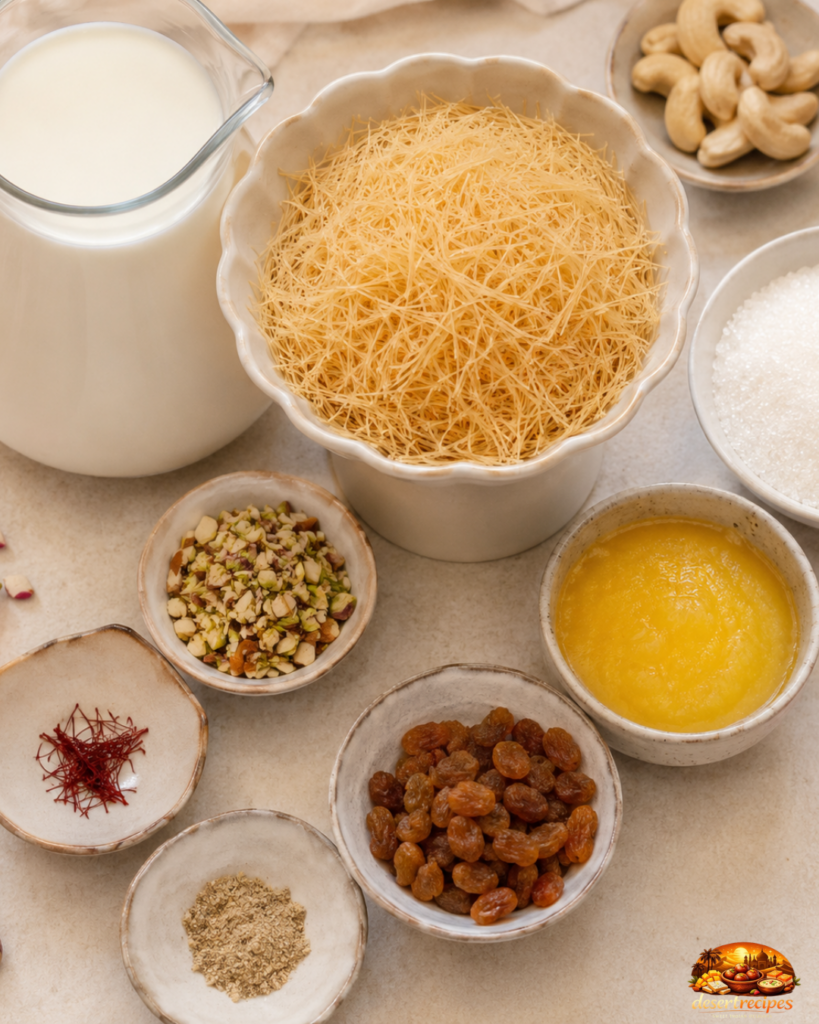
- 1 cup semiya (vermicelli)
- 4 cups full-fat milk
- ½ cup sugar
- 2 tablespoons ghee
- Cashews
- Raisins
- ½ teaspoon cardamom powder
- Few saffron strands (optional)
- 2 tablespoons chopped almonds or pistachios (optional)
Recipe Instructions
- Take a pan or a kadai and place it on low to medium flame, then add 1 tablespoon of ghee into it.
- Once the ghee melts, add the semiya into it and roast it for a few minutes by mixing.
- Keep stirring continuously until the semiya turns golden in color and gives a pleasant aroma. Roasting the semiya is important because it helps improve the flavour and prevents the semiya from becoming sticky while cooking.
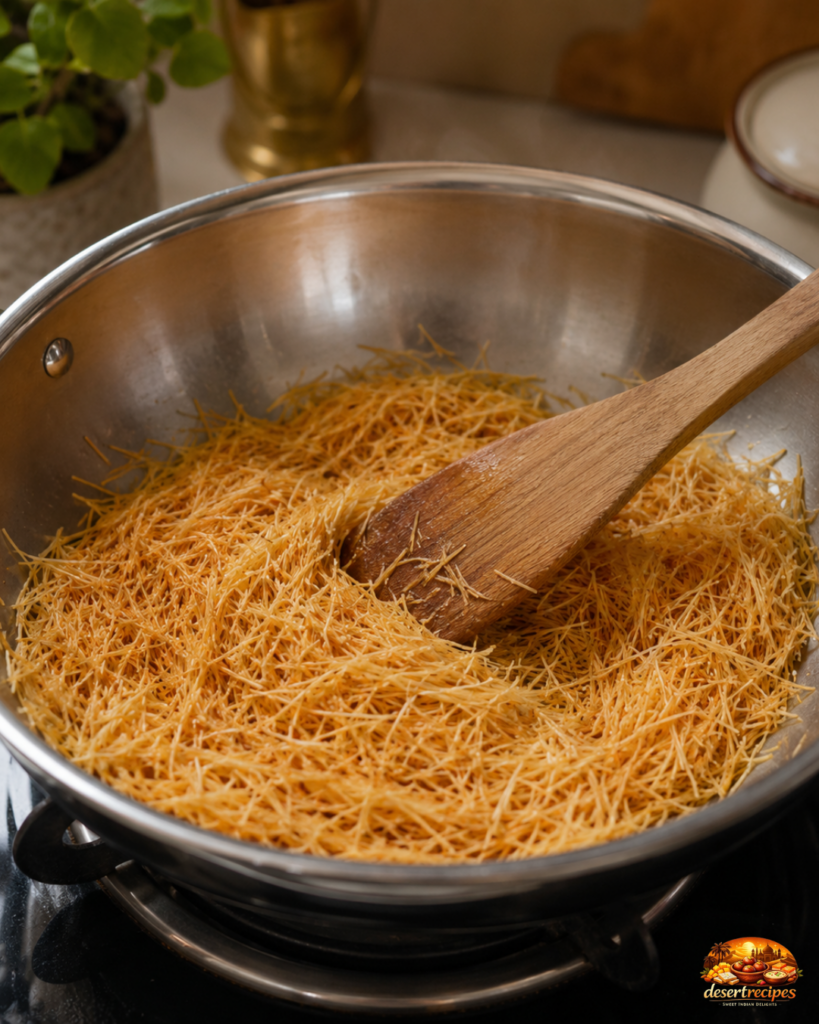
- In case you’re using pre-roasted semiya, you can just roast it lightly for extra flavour.
- Then take another heavy-bottomed pan and pour 4 cups of full-fat milk into it. Allow the milk to boil on medium flame. Full-fat milk is used for rich and creamy results of semiya payasam.
- Once the milk starts boiling, add the roasted semiya slowly into the milk. Mix it gently so the semiya cooks evenly with milk.
- Cook this mixture on low flame for about 8 to 10 minutes until the semiya becomes soft and absorbs the milk properly. The texture must be slightly thick.
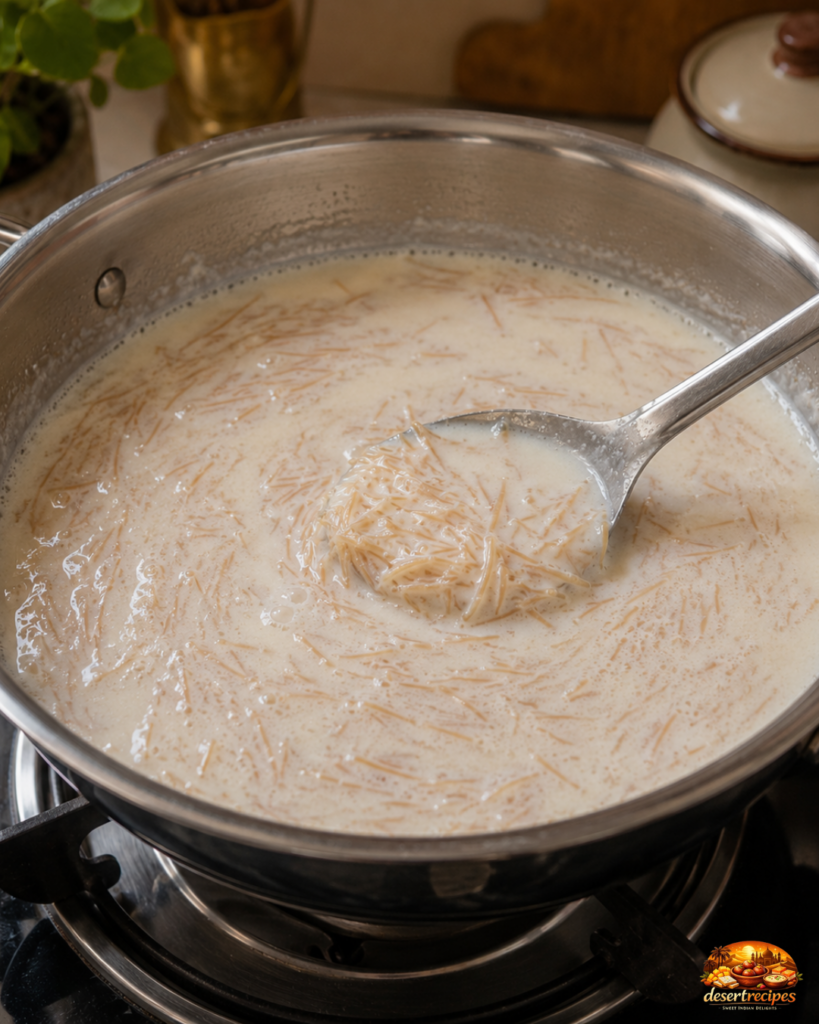
- Do not make the mistake of cooking the mixture on high flame as it may stick to the bottom of the pan.
- After the semiya becomes soft, add sugar and mix it well until it dissolves completely.
- Now add cardamom powder for the flavour. At this stage, the payasam will slowly become rich and smooth in its consistency.
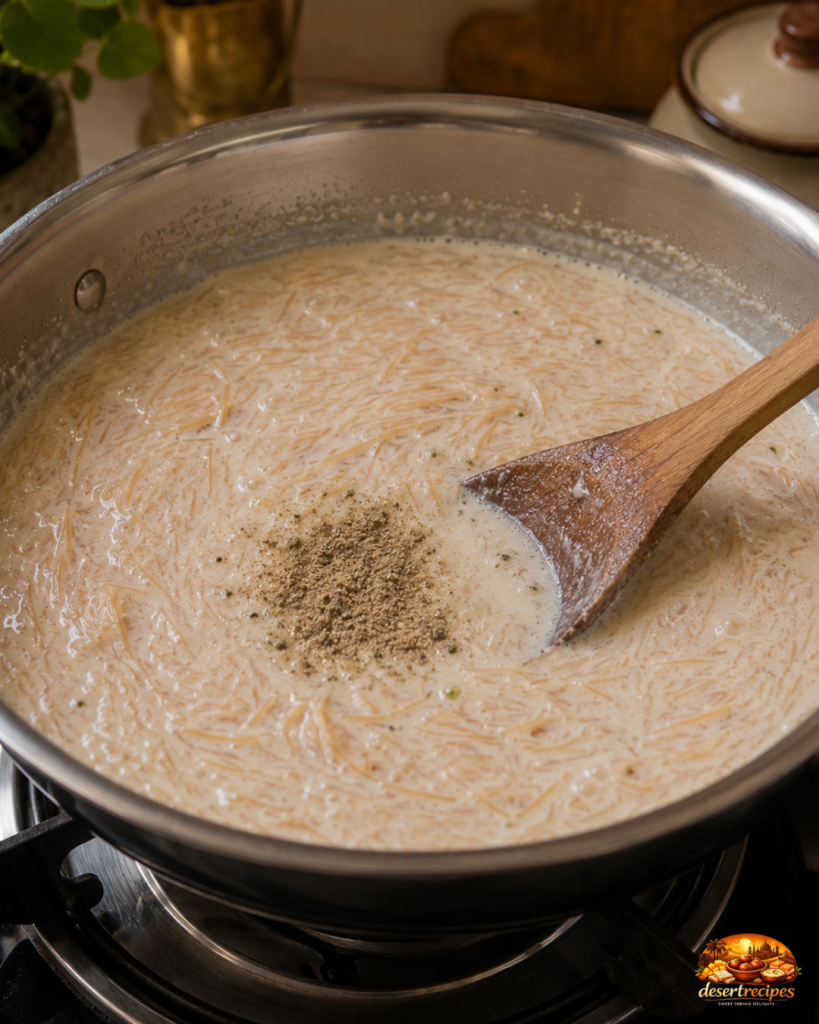
- Take a small pan, add ghee and start roasting cashews and raisins until they turn golden for a few minutes. Adding roasted dry fruits adds crunch and traditional flavour to the payasam.
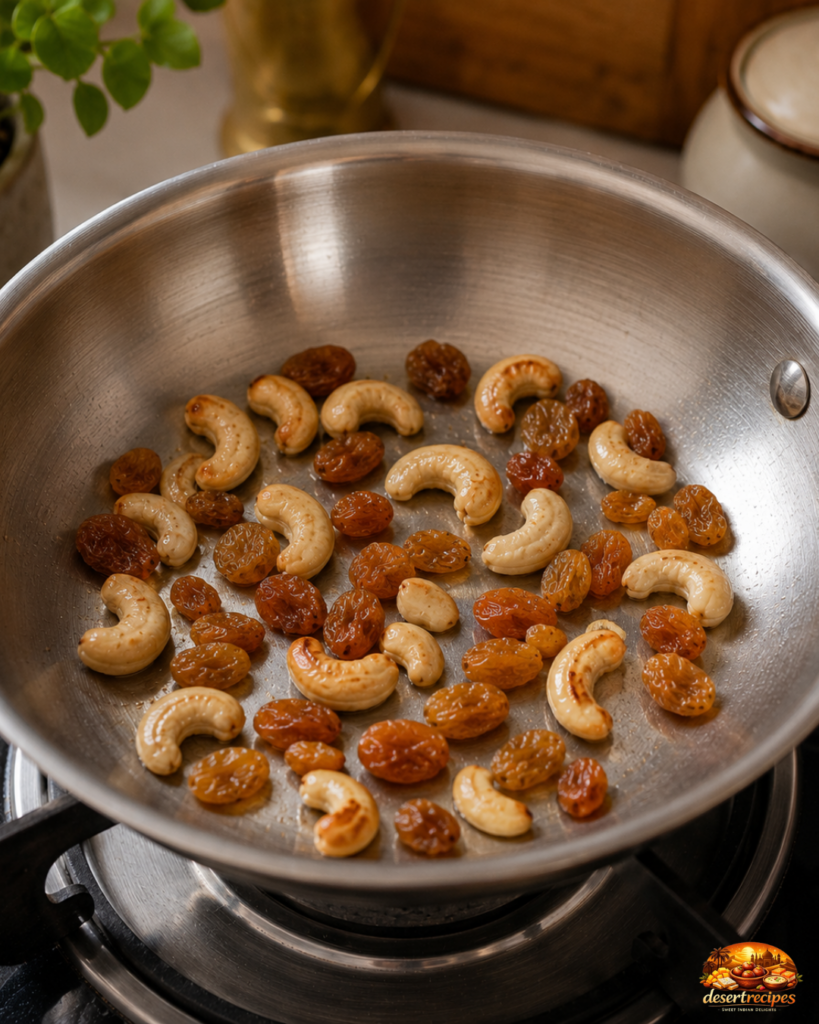
- Add the roasted dry fruits into the payasam and mix well. Allow everything to cook for 2 minutes on low flame.
- Then turn off the flame and garnish the payasam with some chopped almonds or pistachios.
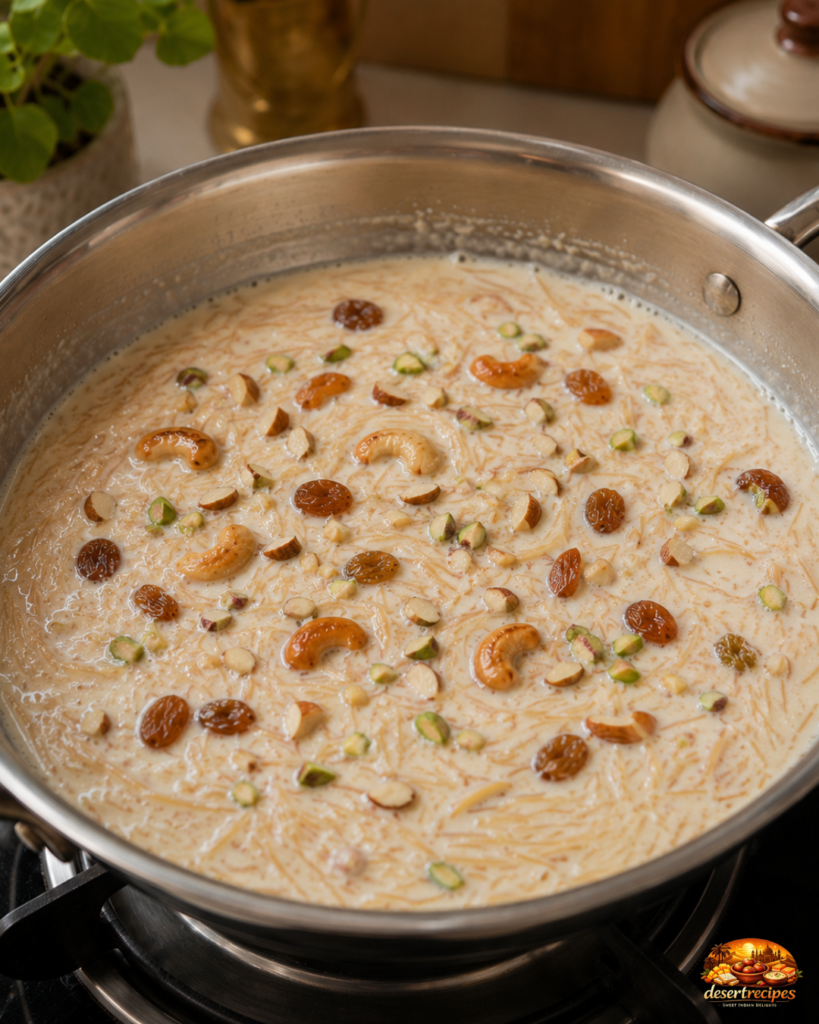
- Your delicious bowl of semiya payasam is now ready!
How Different States Make Payasam
Since payasam is one of the most loved traditional Indian sweets, every state prepares it in its own special way. The ingredients, sweetness, texture, and cooking method can change from one region to another which makes the payasam even more interesting and unique.
- Kerala – Ada Payasam
In Kerala, one of the most famous versions of payasam is the “Ada Payasam”. It is usually prepared using rice ada, jaggery, coconut milk, and ghee instead of sugar and regular milk. It is commonly served during Onam and temple festivals.
- Tamil Nadu – Semiya Payasam
In Tamil Nadu, semiya payasam is a very popular dessert prepared during festivals, poojas, weddings, and family gatherings. It is usually made using roasted semiya, milk, sugar, cardamom, and dry fruits.
- Karnataka – Payasa
In Karnataka, payasam is often called Payasa and there are many varieties made using ingredients like vermicelli, rice, moong dal, sabudana, or jaggery.
- Andhra Pradesh – Paramannam
In Andhra Pradesh, the traditional sweet “Parmannam” is prepared mainly during festivals and religious offerings. It is commonly made using rice, milk, jaggery, and ghee.
- Telangana – Bellam Payasam
In Telangana, many people prepare jaggery based payasam called “Bellam Payasam”. Instead of sugar, jaggery is used as a substitute to create a natural sweetness.
- Maharashtra – Shevaya Kheer
In Maharashtra, semiya payasam is often known as “Shevaya Kheer”. It is prepared using vermicelli, milk, sugar, saffron, and nuts.
- West Bengal – Payesh
In West Bengal, payasam is called “Payesh” and it is mostly prepared using rice, milk, sugar, and bay leaves. The payasam is slow-cooked until it turns thick and creamy.
- North India – Kheer
In many North Indian states, desserts which are similar to payasam are called “Kheer”. Rice kheer is one of the most famous versions of this and is prepared using milk, rice, sugar, saffron, and dry fruits. Kheer is usually thicker in consistency when compared to South Indian payasam.
Commonly Asked Questions
- Are semiya and payasam the same?
Semiya and payasam are closely related but they are not the same. Semiya is the ingredient and in South India it is also known as vermicelli or thin noodles while payasam is a broad term used for India sweet milk pudding.
- Which vermicelli is best for payasam?
For semiya payasam, the best choice is roasted whole-wheat (atta) vermicelli. It is slightly thicker and provides a rich, and hearty texture to the sweet.
- Can payasam be served cold?
Yes, the payasam can absolutely be served cold. In fact, many people prefer serving creamy varieties like semiya (vermicelli) thoroughly chilled.
- How long can payasam be stored?
Payasam (or kheer) can be served for 3 to 4 days when stored continuously in an airtight container in the refrigerator. But for the best taste and freshness, it is highly recommended to be consumed in 1 or 2 days.
- Can I use condensed milk in payasam?
Yes, condensed milk can be used in semiya payasam to make the dessert more rich, creamy, and flavorful. It also adds extra sweetness and gives the payasam a smooth texture.